
50% of low-performing elementary students — and 25% of low-performing middle schoolers — have underdeveloped visual skills that standard eye exams don’t screen.
- Standard eye exams don’t test for reading-related visual skills. They measure distance acuity at 20 feet — not eye tracking, eye teaming, or fixation stability. A student can pass the school nurse’s chart and still struggle on every line of text.
- The problem affects more students than most schools realize. More than 50% of low-performing elementary students may have underdeveloped visual skills. In middle school, 25% still do — reading an average of 80 words per minute more slowly than peers.
- When eyes struggle, comprehension pays the price. Students spending mental energy on the physical aspects of reading have less left over for meaning. The result shows up as low comprehension, fatigue, avoidance, and eroding confidence.
- Visual skills can be developed — this is not a disability or fixed condition. Like other physical skills, they strengthen with targeted practice. They are not the result of a lack of intelligence or effort. The earlier underdeveloped visual skills are identified, the better.
- Students don’t report this — they think everyone sees the same way. Ask the right questions and they’ll tell you: “The words move.” “My eyes get tired.” “I lose my place.”
What You Can Do
- Look for signs: losing place on the page, finger-tracking past 2nd grade, head tilting, squinting, and avoiding close work are all observable signals.
- Screen early: standard literacy assessments tell you that a student is struggling — but not always why. Pair them with a visual skills screener that looks upstream at the foundational cause.
- Build a few minutes into the day: five to ten minutes of visual tracking warmups, near-far focus shifts, and simple eye-teaming activities can be folded easily into existing phonics and vocabulary routines.
Free Tool Available Now
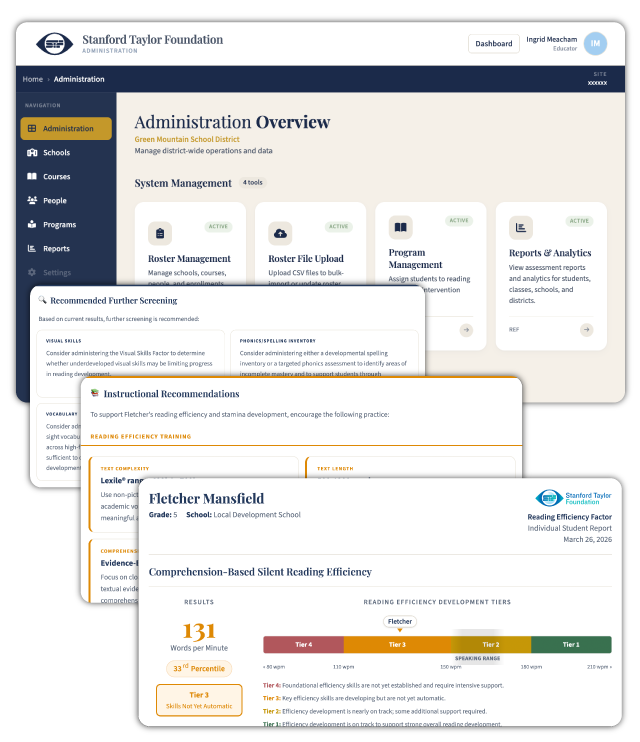
Visual Skills Insights (VSI) is a free, group-administered screener that classifies each student into one of three visual skills development stages. It takes 20 minutes to complete and generates educator reports with an instructional focus and actionable recommendations — no specialized training required.
Free pilots available now.
Related: Why Reading Efficiency Matters
Source: Spichtig, Ferrara, Brower & Gehsmann (2025). Research presented at the Society for the Scientific Study of Reading (SSSR). Study of 369 students in grades 2–8.